Yash Pandey
Movement Training
Q1. WHAT Movement training is all about ?
Human body is a complex chain of interconnected muscle, tendons, bones, joints, ligaments and many other tissues and organs that work in coordination as one unit. And this is where movement training which is also sometimes referred as functional movement training comes into picture. Movement training mainly focuses on training movement patterns rather than isolated muscle group, it mirrors how human body is meant to move and helps to make it move even more efficiently. There are 7 primary movement pattern that forms the base for movement training (based on which more complex patterns and exercises can be created), these are
Squat
Bend or Hinge
Lunge
Push
Pull
Rotation or Twist
Load Carries or Gait
Q2. What makes it a unique form of fitness ?
A. What makes movement training unique is the fact that this kind of training works several muscle groups at once. Movement training resembles the real-life situations rather than the movements that you perform only in gym, for example strengthening quadriceps muscle through a traditional method will be done using a knee extension machine whereas movement training will incorporate a squat movement which will not just strengthen the quadriceps but many other muscles that work synchronously to move your knees and hips. As a result you will develop strength along with mobility, core stability, and neuro-muscular control. Movement training addresses muscle imbalances and asymmetries that build a strong foundation towards athletic movements as opposed to traditional weight training which attempts to build muscle volume. For athletes movement training not just improves their physical performance but also minimises the risk of injuries.
Q3. How does one start with movement training and what kind of preparation is required ?
A. If you are a beginner with movement training then you need to start developing the 7 primary movement patterns even before you jump on to more complex variations. Make sure that you are mindful about the movement and exercise that you are performing, understand which muscle groups are supposed to get targeted during that specific movement and whether you feel those muscle groups working. Practice movement training 3 to 5 times a week at a slow and controlled pace. If someone has difficulty performing any of the primary movement pattern then easier variations should be done in order to understand the movement, for example, if someone is not able to perform deadlifts which is a hinging movement then he should start with simple variations like Bridging, Hip hinges in kneeling, Hip Thrusters etc and slowly move to deadlifts once the foundation exercise for hinging is mastered.
Q4. What are some do’s and dont's in movement training?
Do’s
- make sure you do adequate warm up which is specific for the movement pattern you are training
- proper cool down is a must to prevent Delayed Onset of Muscle Soreness (DOMS) and muscle recovery.
- always coordinate breathing correctly to prevent your blood pressure from escalating, you should exhale during the hardest part of the breathing.
- hydrate adequately before, during and after training.
- perform the movements to full range of motion.
- Do follow a program and set short term and long term goals.
- if possible have a professional supervise your form at least during the initial training days.
- Quality over Quantity, give importance to the quality of movement rather than how much you you are able to lift.
Dont’s
- don’t train till exhaustion .
- don’t ignore pain, pain is your body signaling that something is not right, get it checked.
- don’t be in a rush to quickly progress with the weights
- avoid jerky movements which may put sudden load on joints
- don’t repeat the same movement pattern every time, give equal importance to all the movement patterns.
- don’t overtrain as it may lead to injuries.
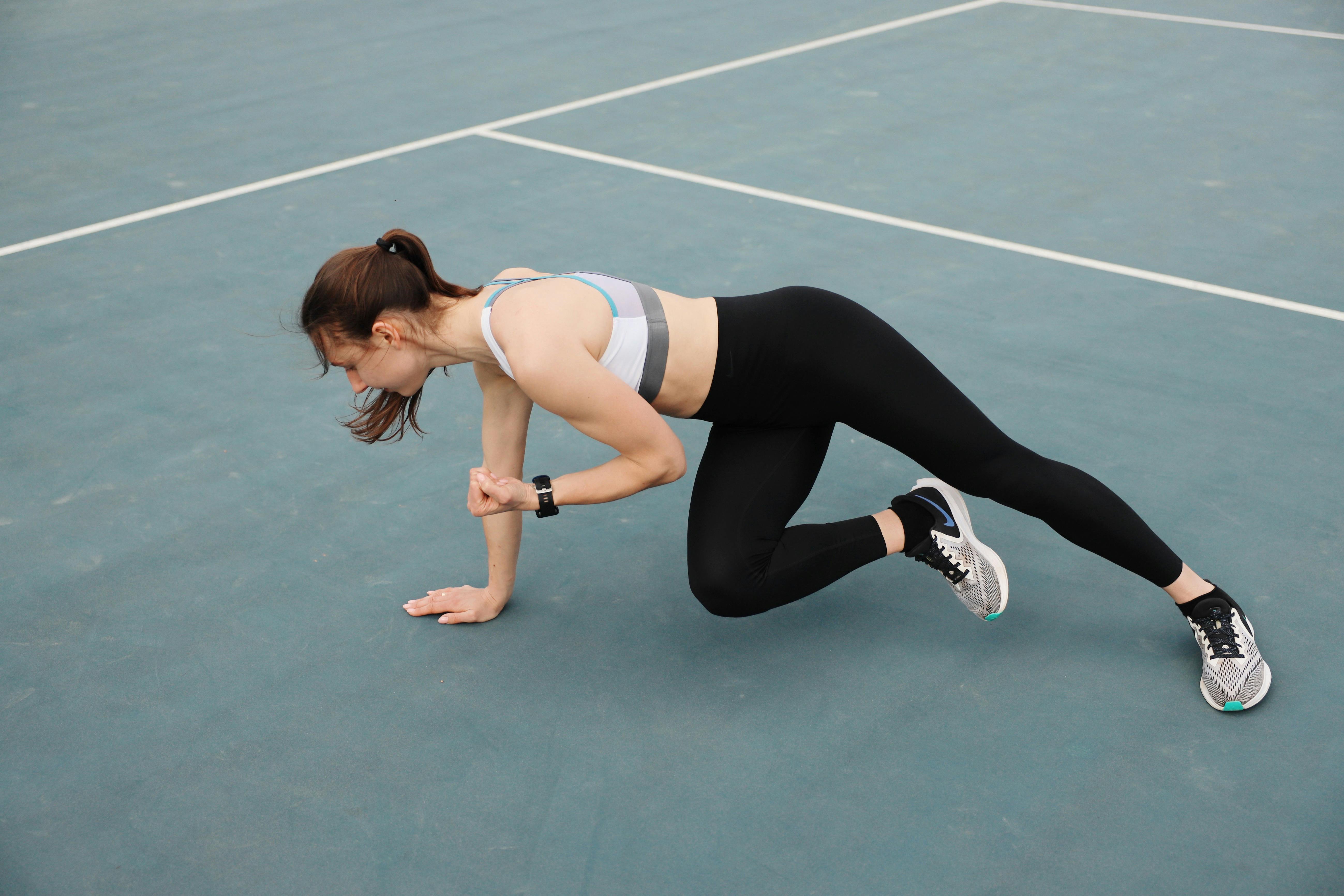
Q5. Anything else on movement training ? You can give a couple of examples with pictures.
Movement training is focused on movement patterns that have a purpose, the purpose can differ depending on your work and activity requirement, for an athlete the purpose can be to compete in a sport at his optimal capacity whereas for a general person the purpose can be simply walking, squatting, picking up an object etc. Movement training workouts practically prepares you so that you can handle the load of your daily activities without getting tired or injured. Therefore movement training can be done by everyone irrespective of your gender, age, physical activity requirements.
Examples
Deadlifts - deadlifts are a classic example of a hinging movement which mainly targets the posterior chain of the body. It can be done using a dumbbell or a barbell and can have different variations.
Wood Chops - this is a classic example of a Rotational or twisting movement which mainly targets and oblique chain of muscle including the muscles of your thighs, core and shoulders. Various sporting movements like Swinging a golf club, throwing a ball, etc will involve a rotational movement of the body and hence wood chops become an excellent exercise to improve these sporting movements.